Showing posts with label Bath Spa University. Show all posts

Tuesday, 17 November 2015

New Student, New Discoveries!

I have just started my third and final year of my undergraduate degree at Bath Spa University. This is also my first year of working in the Bath Spa Archive.

Acts of Parliament. Photo by Lisa Coomes

The main reason why this placement interested me is because it would allow me to use the skills I have learnt in an actual historical project and to learn more about the history of my university. Since starting in the archive I have been cataloguing books we have received from the Bath Record Office, mainly Acts of Parliament. The process of cataloguing I have heard mentioned many times in lectures but have never thought of the actual process you have to go through. As we were not a 100% sure what we had received and the condition of each item, I had to look at each book individually and note it all down. Whilst doing this I found interesting this inside the books such as an envelope with a stamp from 1950 with a stamp of George VI.  I found this really exciting as I don't think I have ever seen another monarch other than Queen Elizabeth II on a stamp before. At the end of the last session in the archive, I started putting it all into the computer. The thing I learnt most from doing this, was the format in which documents are recorded.

Envelope found in one of the Acts of Parliament. Photo by Lisa Coomes 

As I mentioned above, I also chose this placement because I wanted to learn more about the history of the university I have been at for the last 3 years. Since, starting in the archives I have learnt a lot of the history about the estate. From learning that the castle itself was a tower of the original 14th century house to the architectural designs and changes put in when the estate was developed to make it suitable for the women's college. I have also discovered places I have never seen in the university such as the servant’s service corridor under the main house and the Octagon room!


Despite being at the university for 3 years I have never been exposed to the history. One of my main personal aims for the project would be to share the history of the estate and the archive on a wider scale within the university.

By Lisa Coomes


Wednesday, 21 January 2015

Finding a Home for the Sydney Building

When thinking about constructing a new building for a site, whether it is a university or otherwise, an integral part of that planning process is to consider the question ‘where is it going to go?’. Generally, in the 21st century and particularly in Bath, this kind of enterprise comes with a host of practical concerns of the potential impact that such a building might have on the surroundings.
 Now, we all love our campus here at Newton Park for it’s great beauty and peaceful atmosphere; it’s sparsely built and seems to co-exist with the countryside around it. Much of what we appreciate today of the site is down to the famed 18th-century landscape gardener, Lancelot ‘Capability’ Brown who beautified the grounds for the Langton family who were living there at the time, in what we now know as the Main House. From dainty ornamental trees to the beloved lake, his mark has truly been left on the site, and it is him we have to thank for wonderful views such as these;


The view from in front of Main House (2015).
   It is truly a lovely view. So, you can imagine our bemusement in the archive when we came across two black and white photographs of this exact view here, largely unchanged. These photographs were dated from the 1950's, when Newton Park was home to Bath Teacher Training College, which opened in 1946. However, they had not been left as they were. In some kind of collage, a small drawing of what we would now know as the Sydney Building which is used for accommodation has been superimposed over it.
The view directly in front of Main House.

A view we will be familiar with today (1954).
   Disregarding the imposing presence of the prototype Sydney Building, the view seen in these edited photographs is one that is very familiar to us, even sixty years on. Particularly distinctive is the tree that can be seen in the foreground of both the modern and the 1950's photographs. 

   These two photographs were most likely dated from the year 1954 which is the year that the Sydney Building was constructed. Given some of the notes scrawled on the back of the two photographs, it is likely that these collages were an attempt to visualise how suitable the Sydney Building would be if it were to be placed in this location. What we do not know, however, is exactly who came up with the idea to place the building in such a location, and more importantly, what their motives were for doing so.

   These collages look remarkably similar to images that some building projects generate in the modern day to simulate how the end result of the ongoing project may look. Often, software such as Photoshop will be used in order to create a realistic looking image. Obviously, we know that this kind of opportunity was not available in the 1950's, however the level of detail that the artist has gone to in order to create a realistic image is striking, and gives us a good idea of how the building may have looked, had the decision been approved to place it there.

The Sydney Building (2015).
   Above is the Sydney Building as we now know it, and where it has been for the past sixty years. The location that was decided on allows the campus to retain the same stunning view that it has boasted since the 18th-century, and the serene vision of Lancelot Capability Brown continues to live on at Newton Park.

Wednesday, 11 September 2013

Guest Blog Post - Laura

This week, Laura gives her view of the last few months:


'Listen! The wind is rising, and the air is wild with leaves,We have had our summer evenings, now for the October eves!' (Humbert Wolfe)


So, summer is coming to an end and autumn is taking over, creating beautiful scenery for us to admire on our way into the office (armed with jumpers and scarves) but before I begin my final, scary, year at university, I wanted to take the time to reflect on what we have been doing over the summer, and what I have discovered so far. 

Since my first trip to Corsham on the 17th April, I have not only learnt a lot about working at an Archive, but also about the history of Newton Park and its residents, from the Gore-Langton family, to the students who walk around the campus today.

This summer we have been busy, from completing our exhibition preparation to cataloguing each and every item in our office! In between these two jobs, we have been transcribing oral interviews, as well as going to a number of re-unions organised by the Alumni Association at the university. My first ever day at the office was spent cataloguing, and though over the summer we changed our method, it is still one of the most important tasks we do, as it ensures easy and straightforward access for future historians looking to find specific documents relating to their research. It has meant many hours sitting at a computer screen and describing and numbering each and every item we have, before placing them into special archival-standard storage boxes.
Cataloguing - so satisfying once its done!
As I joined the Archive in April most of the oral interviews we have had already been conducted, though I did have the opportunity to sit in on one of them, which was fascinating, to meet somebody and have them share their experiences of what it was like to come to the university over thirty years ago. Writing transcriptions are also interesting, especially if you were not at the actual interview, as you get to hear people’s stories and memories, however the actual transcriptions are extremely time consuming, as on average it takes seven hours to transcribe one hour of audio! However despite how time consuming they are, they are interesting, and it is an invaluable skill to gain, especially as it has increased my typing speed significantly!
July Reunion at Newton Park
July Reunion - meeting new friends, re-visiting old haunts
Having heard the memories of many individuals through listening to their oral interviews, it was a fantastic opportunity to join some of them at their re-unions in July. Whilst we were there Hayley, Kate and I were asked to talk about our experiences of being students at Bath Spa, which was great, as it meant we reflected on our time here, and realised what a lovely place this university is. I really enjoyed talking to the alumni, hearing their stories as well as telling my own! One particular memory that we learnt had been shared by many students of the university, despite their era, was sunbathing on the roof! Having overheard a lady talking about how she used to climb onto the roof of stable block to catch some rays, Hayley felt obliged to share with her that I, also, found my way onto a balcony area of my halls to catch some sun. Obviously some things never change!


Tuesday, 23 July 2013

Graduations

Last week, two members of the archive team graduated, amidst the splendour and joy that is the Bath Spa University Graduation Ceremonies. In a change from the usual venue of Newton Park, this year's event took place in the heart of the city, at Bath Abbey.

Over the years, a variety of settings have been used, each one being ideal for a time, before expediencies of organisation dictated a change. In the early days, there was no formal 'graduation' as such, but a summer event marking the culmination of studies took place in the grounds and buildings at Newton Park. This 'Commemoration Day' saw large scale drama productions (including a full medieval pageant on one or two occasions) as well as family picnics and displays of work.

Historic pageant for Commemoration Day, June 1963

Commemoration Day dance display by students, c.1950.
In the 1980s, the Assembly Rooms in Bath were used for the event, but the growing number of students soon meant that the space was too small. The solution then was the huge marquee, on the lawn in front of Main House, which is where I first graduated (with the BA in History) in the Summer of 2011. 

The marquee itself is vast, and accommodates a large stage, with steps at either side. Nerves, high heels or a combination of the two can make these steps seem like a mountain. The fashion for ever-higher heels has presented an even greater challenge in recent years, too.

Graduation at Newton Park, July 2011

Students take their places at one end of the marquee, July 2011
The backdrop of Newton Park makes these graduation ceremonies very memorable. Registration takes place in the Library, gowns are donned in the University Theatre, and family and friends can congregate around the refectory at Moreton (formerly the assembly hall) 

Last Saturday, Bath Spa students, staff and families seemed to be everywhere in the centre of Bath. The Guildhall was a hive of activity for registration, gowning and official photographs. Downstairs, the Alumni Association were busy taking photographs to use in the alumni magazine. Students posed with a huge 'golden scroll', which was great fun. These pictures can be viewed through the Alumni Facebook page at https://www.facebook.com/BathSpaUniversityAlumni?fref=ts

The Academic Procession, ready to enter Bath Abbey for the second (of eight) ceremonies on 19th and 20th July 2013

Jubilation from some of this year's graduating Master's students and their tutor.
Walking over to the Abbey, capped and gowned certainly caused a stir. It was a lovely atmosphere, amongst the crowds in the Abbey Churchyard, and we raised the profile of the university as all sorts of people took photographs and watched everyone in their ceremonial glory. Some tourists asked to pose with groups of graduates! It was a joyous occasion all round. 

Wednesday, 10 July 2013

Plans for Summer

For most parts of the university, life becomes rather different over the summer, and this is reflected in the activities of the BSU Archive office, too.

Most of the undergraduate students have now left for the vacation, and a proportion of these will attend their graduation ceremonies later this month. 

Postgraduate students are still in evidence, as their academic year usually lasts from September to September, but these are far fewer in number and a little more difficult to spot anyway, being always so studious and with their noses so firmly to the grindstone!

The archive work during this 'quiet time' is supplemented by attendance at College Reunions, organised by the Alumni Association, and taking place much more frequently now that the alumni office has grown over the past months. There are three such reunions taking place in the next few weeks. The archive team will be there to meet groups of former students, and we arrange displays of archive materials to show them. More news of these events will follow in future blogs.

Former student Christine, contemplates the Newton Park scenery July 2013

Summer is also a time for rest, recuperation and research, and some of the team, moving from the second to the third year of study here, will be hard at work with dissertation research. This is the case for Adam, Hayley and Laura. Richard is preparing for his MA postgraduate studies which begin in September, and Kate has officially been a PhD student since 1st July. Research is continuing in earnest!

Over the summer months, Corsham Court continues to be gently buzzing with postgraduate activity, but Newton Park, now almost empty of student activity, returns to its grand, peaceful splendour as a country estate. Its at this time that one's imagination can drift to former ages and times, and picture a life here before college habits took over. I recall interviewing a former student, now almost 90, who came to visit on a September Sunday morning; we sat on a bench outside Main House, and she told me wistfully that it was 'Just the same. Just the same...' 

Two sets of people here are still extremely busy at this time, of course. These are the teams involved with the Graduations, and with Admissions. Both groups are even now, bracing themselves for the challenges ahead. This year's graduations take place on 19th and 20th July at Bath Abbey. 

The Admissions team swing into their busiest period of activity in mid August, when they will be on hand during many long working days, to receive, placate, reassure and welcome another cohort of students. Another set of memories is about to begin at Bath Spa University.


Wednesday, 15 May 2013

The New and the (Not So) Old

This week Hayley and Laura have written the guest post and have decided to hold an interview so that you can get to know the two archivists a little better. Hayley has been working at the Archive since October 2012 and Laura is our newest recruit, starting in April 2013.

How did you come to work at the BSU Archive? 

Hayley: I selected the Humanities at Work module for my second year of study as I want to work at the Imperial War Museum as Education Officer and felt that I should start gaining experience of working within active historical environment. I was given the choice of working at the Archive (then known as the Newton Park Project), working on digitisation for Bath in Time or at an excavation project with connection to the Roman Baths. I chose to work at the Archive as working on a brand new project in which I got to meet past students and staff of the institution I studied at sounded fantastic. 

Laura: I knew Hayley before starting at the Archive, and it was her passion and interest in what they were doing that really got me interested, especially when she would sit and tell me things about the Gore Langtons and the history of Newton Park and Corsham Court. I already followed the BSU Archive Twitter feed https://twitter.com/@BSUArchive , so had a little understanding of what had been going on, so as soon as I found out about the summer module I contacted Bobby who seemed more than happy to let me get involved and join Hayley and the team here at Corsham Court the next week to see if I was interested.

A view of the East Wing of Main House.

Did your first impressions of Newton Park encourage you to find out more about the history of the institution?

Hayley: Definitely. I had not visited the university before I came to live and study in Bath. I was stunned by the beauty of the buildings and landscape of the campus and my inner historian wanted to find out more, but I didn't know where to get information. When the opportunity to become involved in a project that would teach me more about the institution whilst providing me with experience of a working archive arose, I grabbed onto it with both hands!

Laura: I came to the university in 2010 to visit a friend for a week, and fell in love with the campus and its grounds. Once I then started at university I learnt a little more about the history of the grounds however it wasn't until Hayley started telling me about her work at the Archives that I realised just how much history there was surrounding the estate, and ever since then I have wanted to be a part of finding out more!

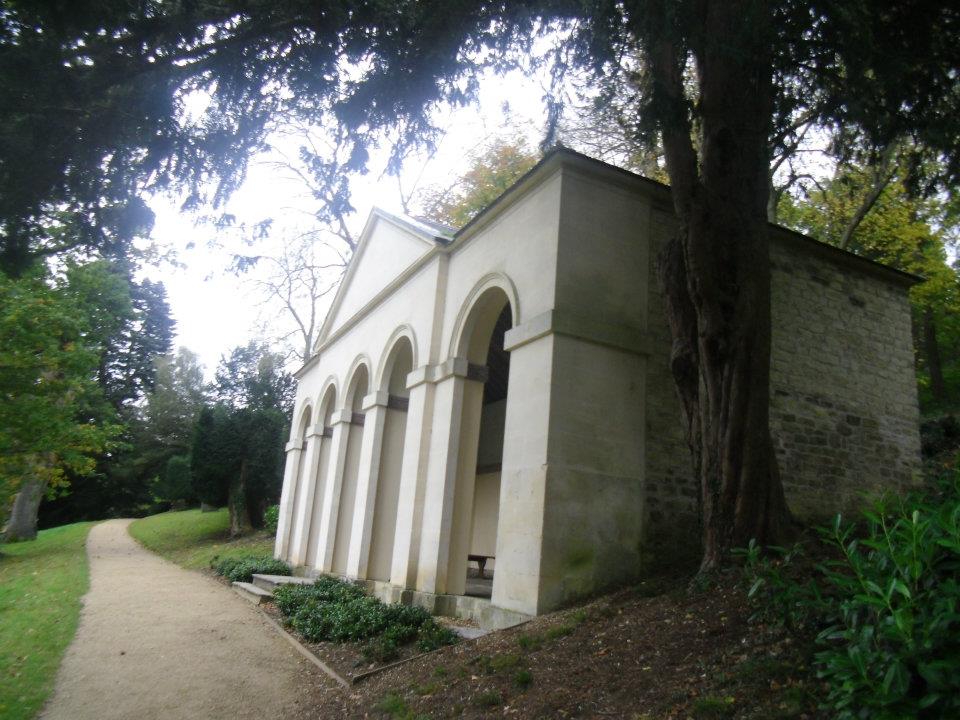
The Garden Temple

What interests you most about working at the BSU Archive?

Hayley: Of the wide scope of work that we do here, for me the oral history section of the Archive is the most enjoyable part. Whilst we have been given some fantastic donations of former student’s work and some beautifully crafted scrap books, I feel that physically interviewing past students and staff has a competitive edge when regarding personal accounts of the past of the institution. During the interviews these people share their memories and seeing their facial expressions and hearing their tone of voice can affect your impression of what they’re talking about. The human history is made more real when you are face to face with someone who used to sleep in the room you now have seminars in!


Laura: I didn't have any experience with regards to oral history and working with in an Archive before,  other than what I had studied as part of my course, so I am really interested in finding out more about how it works, and the logistics of actually putting together an Archive, as it all seems very complicated to me at the moment. What I am most excited for right now is meeting people who went to the university before I was even born, and hearing their stories about what life was like, as well as having access to pictures of what the campus was like before. I am also really interested in the family history behind both Newton Park and Corsham Court, and despite reading quite a bit about them, would love to find out some more. 


Hayley and Laura having a look at the Technical School's minute book from 1905.

Monday, 29 April 2013

Mrs Thatcher's Generation

Whatever your politics, you will not have been able to ignore the death of Margaret Thatcher, a woman we all know something about. Whether through direct experience, or through the stories which have been published over the past weeks, we all know something of the life, work and achievements of this country's first woman Prime Minister.

Mrs Thatcher's generation? The Class of 1949 at Newton Park
I can see many parallels between women like Margaret Thatcher and the generations of former staff and students we have interviewed. These interviewees are predominantly women, as in the past we produced mostly women teachers. And because these women trained to be teachers, they had careers, some long, some short.  Some married, some had children. Most continued to work to some degree or another. They are the generations who grew up in the shadow of war, who attained a certain standard of living, promised in the aftermath of the thirties and forties in Britain. This cultural background coloured their opinions, their upbringing and their education, in a way which we struggle to understand today. 
1948: A student attends an interview with Miss Dawson, accompanied by her parents (and younger sister?) . Newton Park was not ready for use until 1949, so may only have been visited for the interview and annual Commemoration Day in June.

It seems to me that people then got on with things in a different way. Instead of fussing about things, you put your head down and worked hard, since, by contrast to wartime conditions, life was a good deal better. The privations of their youth (wartime restrictions and so on) coloured their future lives. My generation ridiculed this tendency; we certainly didn't understand it.

During the oral history interviews, I've been ready to hear about issues of feminism, of equal rights, and of unfair treatment towards working women. Although on one hand it seems a little disappointing when these things are absent, it also makes me feel humble to know that in the 1950s and 1960s, you proved yourself by simply getting out there and getting on with it. The only 'complaint' was around the firm expectation that a woman teacher should wear a skirt!

Sue, at Wellow Station on her way to teaching practice, early 1960s.
(Photo: S.Tewson)
I myself come from a family of similarly strong women, who ran businesses with their families, and tackled any tasks which happened to need doing. I'm not sure if my feisty grandmother would have described herself as a feminist (or whatever the term would have been for her generation) but she certainly expected people to work hard and make a difference to their lives - the difference being dependent on the amount of hard work one was willing to put in. This attitude, born of a particular time and place, is perhaps now passing from our culture (discuss?!)

Famous people like Margaret Thatcher will have their stories told many times. The history books will be filled with details, opinions and analysis of the part they played in the nation's story. Not so the thousands who got on with the job every day, and lived through the same years. 

Oral History is a way to counteract this. By talking to the people who experienced life here, we hope to bring the nuanced details of history to the archival record.

Commemoration Day choir performance, 1964 (Photo: S. Tewson)

We continue to welcome a host of fascinating people to interview. Next month will be the turn of a former Newton Park student from the 1950s and a music lecturer who saw several decades of change in the same setting. Its always a pleasure to hear their words, and we look forward to sharing their stories.


Wednesday, 17 April 2013

Digitisation Doctor Conference

Starting off a series of 'guest' blog entries, the Archive (or at least half of it) had an away day today, and attended a digitisation information event in London. Being from London myself, it's always great to get to go back, particularly for educational/academic visits. I've had the pleasure in the last year of being able to visit the British Library for an Oral History Workshop, for example.

Kate and I went to the Wellcome Trust at Euston, a building which I have passed many times on my travels around town but never had the privilege to visit before. It was a great venue and I must say I loved the modern style of the architecture, a great juxtaposition to the great St Pancras Hotel - or St Pancras Station if you believe the Harry Potter franchise - a few hundred yards away.

The Wellcome Trust was a great venue

I think it's fair to say that we were treated to an outstanding day, my first proper conference of sorts, having attended a number of workshops with my secondary school. The papers were varied but all highly applicable to the developments at the Archive.

I could easily highlight any of the presentations but I want to mention specifically William Kilbride (follow him on Twitter @WilliamKilbride) from the Digital Preservation Coalition. His 'Preservation Planning in 12 Questions' was particularly brilliant and I can definitely see myself incorporating this into my MA in the coming two years. On a personal note I am thrilled to have been accepted on that course and look forward immensely to continuing my studies here at Corsham Court.

These are some great questions that preservation projects would do well to keep in mind... 

I also particularly enjoyed Christy Henshaw (@Chenshaw) who spoke about workflows in digitisation projects. Her flow diagrams certainly took me back to the project modules I did on my ICT A-Level. Memories! Finally, I wish to mention Simon Tanner (@SimonTanner) and his talk on Optical Character Recognition (OCR). It has certainly led me to appreciate the systems available via Bath Spa University's Electronic Services. I cannot help but feel a lecture on this to undergraduates would help them to appreciate the enormity of the scope of putting such resources online, and why currently they cannot hope to be 100% accurate.

All of the talks had some resonance with our project, though, and elements of them all will no doubt feature on our work as it progresses in the next couple of years. It really is an exciting time for anyone associated with the BSU Archive!

There was also time for discussion with the rest of the group, and we were fortunate enough to be able to chat with some representatives of the Collections Trust, based at the Natural History Museum, South Kensington. They opened our eyes to some fantastic funding opportunities available through the European Commission, particularly the Europeana project. This looks like it could have the makings of a fantastic portal for materials across Europe. I highly recommend it to any fellow students or those interested in European history in general. Who knows what one might find there?

The day was made even better with the use of Twitter, allowing members of the group to communicate with the speakers once they had finished. They were also able to post up their slides before they spoke so that we could follow on our connected devices as well as on the projector. For those interested, you can have a look through the tweets using the hashtag #digidoctor. For someone involved with IT, it was an excellent use of social media to help add to an already excellent event. In my opinion it really showcased the power of social media.

Today has certainly got my creative juices going and I can already think of directions to take the digitisation of the project forward, particularly in relation to OCR systems, funding, planning and development of a cataloging and online digitisation system. I have really enjoyed today and once again look forward to helping the project to develop in the future. I could write so much more but I think I leave more detailed specifics (for now!) to my own private reflective blog for the project. Good things come to those who wait...

There was even some time to stop by one of my favourite watering holes in the area before heading back to Paddington for the train to the West Country. As I write we are being delayed by signalling problems, some things really never change! Had a beautiful sunset to bid me a fond farewell from the capital, so it's not all bad news.

From the train coming out of London

I would once again like to point a friendly finger towards our own Twitter presence, @BSUArchive. Please do give us a follow to keep up with our latest news.

Richard

Wednesday, 10 April 2013

Oh...the weather

While we shiver and wait for the spring to arrive, here at the archive office Oral History interviews have continued. We always have to apologise for the coolness of the office itself - but it is an archive after all!

Over the past two years, we have heard from around fifty people, who have either told us, or written down their memories. The majority of these people are former students, and about a quarter were staff members.

Visiting schoolchildren investigate the chicks at Corsham Court. A 1950s  spring scene.
So many people have strong memories associated with the weather, and again and again we have been struck by the way that extremes of weather affect people. Consider our recent experience, and the way that this long, cold winter and late spring has affected those around you. At Bath Spa University, it has certainly played its part, and the third year dissertation students seem to be even more stressed than usual. Normally, by now, they would have been able to shed a few layers of clothes, and perhaps enjoyed that freer feeling that comes alongside spring flowers and birdsong. They are, however, still bundled up, struggling against a bitter wind as they trudge up and down the Newton Park driveway. But the life of the student now is a cold one on the whole; by the time the really good weather arrives, term will have finished and the long summer vacation will have begun.

Outdoor sketching at Monk's Park, Corsham, 1950s
For the former students of Newton Park, or Corsham Court, Sion Hill, or any of the other college venues, there are many memories of long summers, of Commemoration performances in the hot June sun, and of sunlit bicycle journeys along country lanes. This puzzled us at first. Was this the rosy glow of youthful pleasure, seen through the lens of reminiscence?


Then we recalled that in the days of teacher training, before university status, terms were similar to school terms, rather like the PGCE course now. So, happy memories of long warm evenings are very real.

Commemoration Day preparations c 1960s
A staff meeting, on the lawn beside Main House, Newton Park 1960s
It seems that the weather in June was always to be good enough for Commemoration Day at Newton Park  to be held outdoors.  At least this is what the photographic evidence tells us. For the first twenty years of the teacher training college, photographs show the women students dancing in short tunics in the Italian Garden.


Commemoration Day 1958. Local schoolchildren playing in the Primary Garden (which was situated next to Castle at Newton Park)

Dancing display at Newton Park, 1957

Details of Commemoration Day at Newton Park, 1960

That's all for now. I hope the weather improves wherever you are. Here at the BSU Archive office in Corsham, the peacocks are getting extremely noisy, which is a good sign that the warmer weather - and the mating season - is approaching. I interviewed a lady last week, who learned to make a peahen call while she was a student here. She could make the peacocks display their glorious feathers whenever she wanted! What a skill! 

More next week...watch this space!

Kate the Archivist
x

Wednesday, 27 March 2013

Digital Archives versus Real Life

In a recent blog I talked about scanning, and how the digitisation of archive materials has changed the world of research. (Take another look! http://bsuarchive.blogspot.co.uk/2013/03/scanning-scanning-and-more-scanning.html) 

There is a good deal of dispute, amongst researchers, historians and in the archive world, about whether online or real access is 'better'. But as with many other areas of life, there are pros and cons to both access routes.

A digitizing challenge: this scrapbook charts the early years of Newton Park Teacher Training college, and was the property of Principal Mary Dawson. All of the items are glued in, and the whole book is rather fragile.

There is more material available to view online with each day that passes. Recent developments have seen the digitisation of Queen Victoria's diaries, as well as Blitz maps of London, made widely available for the first time. As well as offering these resources to a far, far greater number of people, it is also the means to protect the original documents from over-handling.

As a researcher, returning to university as a mature student just four years ago, I was staggered at the sheer number of easily accessible resources available through the university library. Here was a gold mine of information, to be found at my fingertips, via the computer. I read ancient books, opened Georgian newspapers and looked at famous and obscure paintings right down to the smallest brush strokes.

Domestic Science College students, 1916. This photograph is very evocative  of the era, with women students reflecting masculine styles of dress and stance. The image is also stained with dirty fingermarks and battered at the edges

A visit to a 'real archive' and the handling of real documents naturally takes this fascination onto an even more thrilling level, but for me, this initial online access prepared the way, enhancing my interest in primary sources.

I had already fallen under the spell of archive materials via technology when I was given the opportunity for a placement in a real archive. And there, in the search room of the Wiltshire and Swindon History Centre in Chippenham, Wiltshire, I fell under the spell of old documents completely. The feel, and above all the intoxicating smell of them, can transport you to an entirely new level of appreciation of the past. I'll never forget the letter from a First World War soldier and the pressed flowers which fell out as I unfolded it.

The placement with Wiltshire and Swindon History Centre, and everything I learned there, has informed the work we do here at BSU Archive. The ongoing digitisation of our documents will mean access for all those who wish to know more about the history of the university. This in turn will lead to greater research into the many aspects of the past, as yet uncovered. It will also mean that more people could have the opportunity to handle the real documents and, through oral history testimony, to listen to the real people who have experienced life in these places over the years.


Group photograph of Domestic Science students, 1937. This image has been stored, rolled, for many years, and  is difficult to unroll. Another challenge to come...


The first Newton Park students, 1946. Those who have been interviewed from the late 1940s  recall  the simpler pleasures they enjoyed, and a feeling of unity having lived through the deprivation of the war years. 


Want to find out more about the Wiltshire and Swindon History Centre? Website available at  http://wshc.eu/our-services/archives.html 


Wednesday, 20 March 2013

Heritage, Popes, Bones and stay-at-homes

Last week, the archive had a week off, as two of us were involved in a history field trip to Rome. Of course, the trip was arranged long before anyone knew about the papal elections, but what a time to be there...

The view towards the Vatican, from the Capitoline Hill, Rome


The main purpose of the trip was research: into aspects of heritage, the practical application of history and the history and landscape of the Grand Tour. All of these things are relevant to the cross section of students and staff who joined the field trip. And of course, we enjoyed the good food, wine and chatting that took place as well!

St Peter's, 11.03.13. Preparations for the pre-Conclave service.

Italy, and Rome in particular, houses a vast array of heritage from every era. Whether your interest lies in Roman, religious, Renaissance or Risorgimento history, there is a seemingly limitless supply of things to see, to experience and to wonder at.

Your archivist communes with Socrates!

We were struck by one site in particular, as a highly individual use of artefacts. This was the Capuchin Crypt, where an explanatory museum has been built over several small crypt rooms. These rooms contain thousands of bones, artistically and bizarrely arranged into pictures, images, altars, archways, chandeliers and ceiling displays. Complete skeletons in monk's habits stand and lie amidst the bones, overlooking the graves of real monks of the Capuchin Order.

The Capuchin Crypt

The whole thing is strange and intriguing, and a fascinating way to tell a story with archival resources. We pondered long and hard about the interpretation, and considered the way we look after archives today.

Meanwhile, following news of 'fumata nera' and 'fumata bianca' Pope Francis was elected and made his balcony appearance. Those studying the Grand Tour could identify with their 18th century counterparts, who travelled to Rome and witnessed the full grandeur of Catholicism for themselves, and were either impressed or distrustful, as the tourists from two hundred years ago had been.

A Nun celebrates Pope Francis' election with a selection of delicious  cakes! 

Back at home, the other half of the archive team carried on transcribing our most recent set of oral history interviews. We've had a batch of former Bath Academy of Art students visit the archive office recently, and we've enjoyed meeting them and finding out more about this fascinating aspect of our corporate history. As the office is based at Corsham Court, we have loved hearing about student life here in the 1950s - 1980s. It seems the peacocks have always been here, calling, screeching and chasing one another, just as they are today!

Hayley, still transcribing...

Tuesday, 5 March 2013

Scanning, scanning and more scanning

One of the great truths of the BSU Archive is that two of our main tasks are repetitive and time consuming. Scanning documents and transcribing oral history interviews take a very long time.

Yet for those of us involved, these tasks mean that you spend concentrated time with the real words of the past, with the pieces of paper and the recorded voices.

Here in the archive office, scanning occurs in a little corner of the corridor, which at this time of year is rather cold. We are beginning to suspect that in summer, it will be too hot. As is usual with forms of technology, the scanning process is simple, except when it isn't....knowledge of which button to press, in which order, is naturally important. But additionally useful is knowing which tone of voice to use to cajole the machine into cooperating. Or perhaps this is just paranoia...

Our relationship with the scanner is clearly getting too personal.

Documents come in all shapes and sizes, and making sure that the scans don't miss anything, is important. When looking at scanned papers online, I love to see the edges, and although you're a big step away from the real thing, a complete image gives a sense of it. Well-thumbed corners, damaged pages, finger prints and broken spines all add to the sensory experience of archives, even when witnessed remotely. A Historian friend recently posted a twitter image of a medieval manuscript, complete with the inky paw prints of the chronicler's cat - very atmospheric!

Next time you engage with a digital archive, spare a thought for the process which got it online. As well as time, funding, IT support and great documents, it has also been someone's task to stand by the machine, carefully feeding the papers one by one. Maybe their corner is chilly, too.

The opportunities for archive engagement have grown massively in the digital age. The ability to make so much more available online has opened a world of possibility. Especially for those researchers, who can access so much from their own homes. And once you're hooked on digital resources, stepping into a real one is another level of experience altogether.

But more of that, in another blog...

Hayley and Richard make friends with the scanner!